Katie Coppens holds a Bachelor of Arts in Psychology with a Minor in Environmental Conservation and a Master of Arts in Teaching with a Concentration in Environmental Science from the University of New Hampshire. She has 25 years of teaching experience, specializing in biology and English for grades 1–12, with most of her career spent teaching middle school and additional experience teaching high school biology and English in Tanzania. Katie is certified in K–8, 6–12 Life Science, and 6–12 Social Studies. She is the author of the National Science Teaching Association's Science Scope "Interdisciplinary Ideas" column, has written eight science-themed children's books, received three national writing awards, and was honored with the 2022 Presidential Award for Excellence in Mathematics and Science Teaching (PAEMST).
Students learn about the Atlantic Puffin’s recovery in Maine and design solutions to help counter the impacts of rising sea levels on their burrows on Eastern Egg Rock Island.
Inquire: Students explore the design of burrows made by Atlantic Puffins as well as human-made burrows and apply this information to their own design ideas.
Investigate: Students come up with a solution to help Atlantic Puffins as sea levels put Eastern Egg Rock and its burrows at risk.
Inspire: Students explain their solution designs and select ideas to be submitted to Project Puffin. Optionally, students can work together to fundraise at least $100 to adopt a puffin and fund the research of one Atlantic Puffin.
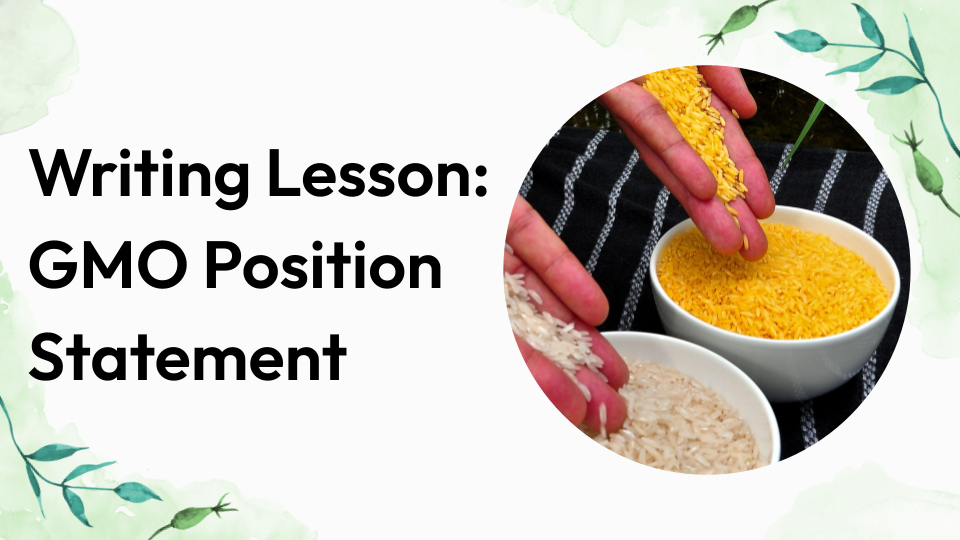
In this lesson students learn about the concept of genetically modified organisms (GMOs), research a genetically engineered solution connected to climate change, and write a position statement.
Inquire: Students are introduced to the concept of genetically modified organisms (GMOs).
Investigate: Students explore the benefits, risks, and unintended consequences of GMOs as they relate to climate change solutions.
Inspire: Students use their research to write a position statement about GMOs and their potential for mitigating climate change.

.png)