

Snow and Ice: Winter Activities for Students
Winter, snow, and ice play a critical role in Earth's systems, regulating temperatures and water supplies, supporting winter ecosystems, and sustaining human communities. This collection of winter activities for students helps them explore these essential processes using weather data and hands-on investigations. Students can investigate snow texture, discover how water changes as it freezes, observe local wildlife, learn about glaciers and artificial ice management, explore the effect of albedo on climate, and examine how seasonal climate change is affecting snowpack and extreme winter weather. These resources make the science of winter engaging and accessible, no matter where students live.

Subjects: Science, Math, ELA, Social Studies
Grades: K-12
Winter Science Experiments
These winter science experiments have students test how snow and ice behave under changing temperatures and conditions.
In this animated video, students explore how snow changes when brought indoors and learn how temperature affects its texture. A linked lesson includes a winter science activity and game.
This winter science experiment shows how water becomes less dense when it freezes by comparing water levels before and after freezing. Students also discuss prior knowledge, analyze results, and record their findings in a journal.
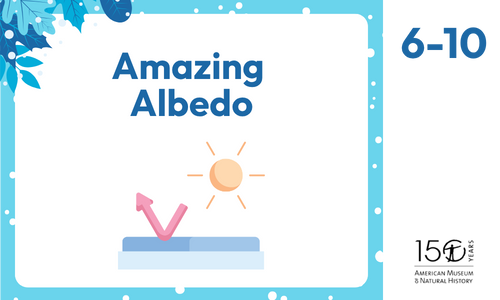
This hands-on winter science experiment demonstrates the effect of albedo, allowing students to hypothesize, collect data, and analyze results while learning how albedo influences regional and global temperatures.
Winter STEM & Nature Activities
This set of winter STEM activities sends students outdoors to track wildlife, build feeders, and observe how nature adapts to the cold.
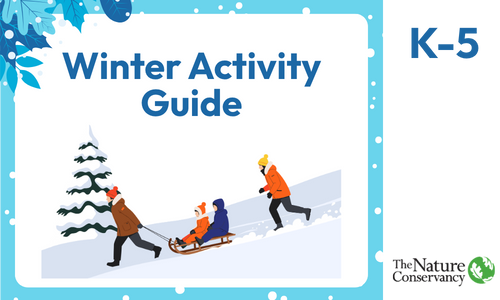
This activity guide from the Nature Conservancy offers five hands-on winter activities for elementary students exploring the outdoors. Students stargaze, build bird feeding stations, identify trees by their twigs, investigate animal tracks, and create a diorama.
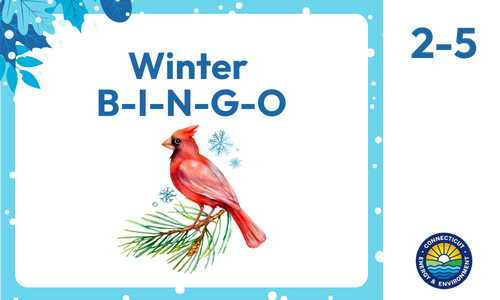
This resource includes a “Winter Fun Facts” page and a BINGO sheet featuring Connecticut plants, animals, and winter signs that students might observe. It can be easily adapted for use anywhere!
Climate Change & Winter Weather
These resources look at how climate change is altering winter weather patterns, from shrinking snowpack to the polar vortex and lake-effect.
This video explains how glaciers form naturally and how people have created artificial glaciers for irrigation and water security. Students learn about their history and benefits.
In this lesson, students explore how climate change may worsen extreme winter weather through discussion, a video, and a jigsaw activity on the polar vortex and lake-effect snow.
This article explains how climate change is reducing snowpack in the western U.S. and why snowpack is vital for ecosystems, water supplies, agriculture, and hydropower.
These resources are just a starting point for exploring the science of winter. For more activities, lessons, videos, and experiments about snow, ice, and their role in Earth’s systems, visit SubjectToClimate.org and discover even more ways to bring the wonders of winter into the classroom.
Teacher Author

Elizabeth Ward - Kindergarten Teacher
Elizabeth Ward brings more than 12 years of classroom experience to her work in education. She earned her Bachelor of Science in Education from Oklahoma State University and has spent her career teaching across a wide range of subjects and age groups, including English as a Foreign Language, Science, Social Studies, and interdisciplinary curricula. Her teaching background spans kindergarten and third-grade classrooms as well as multi-age learning environments, giving her a firsthand understanding of how students grow and learn at different developmental stages. Elizabeth holds an Oklahoma Elementary and Early Childhood Certification and is also TEFL-certified.
Questions Your Students Might Ask
1. Why does ice float instead of sink?
Water expands and becomes less dense as it freezes, so ice takes up more space than the same amount of liquid water and floats on top.
2. What is albedo, and why does it matter?
Albedo is how much sunlight a surface reflects. Snow and ice reflect a lot of sunlight, so when they melt and expose darker ground or water, the Earth absorbs more heat.
3. Is climate change actually affecting winter?
Yes, in many regions, climate change is shrinking snowpack and shifting when and how much snow falls, which affects water supplies, farming, and wildlife.
4. How do glaciers form?
Glaciers form when snow piles up faster than it melts, year after year, until the weight compresses it into thick layers of ice.
5. Why does snow feel different depending on the temperature?
Snow crystals change shape as temperature shifts, which is why snow can feel powdery and dry one day and wet and packable the next.