
Whole of Cuba Goes Dark as Power Grid Fails
October 21, 2024

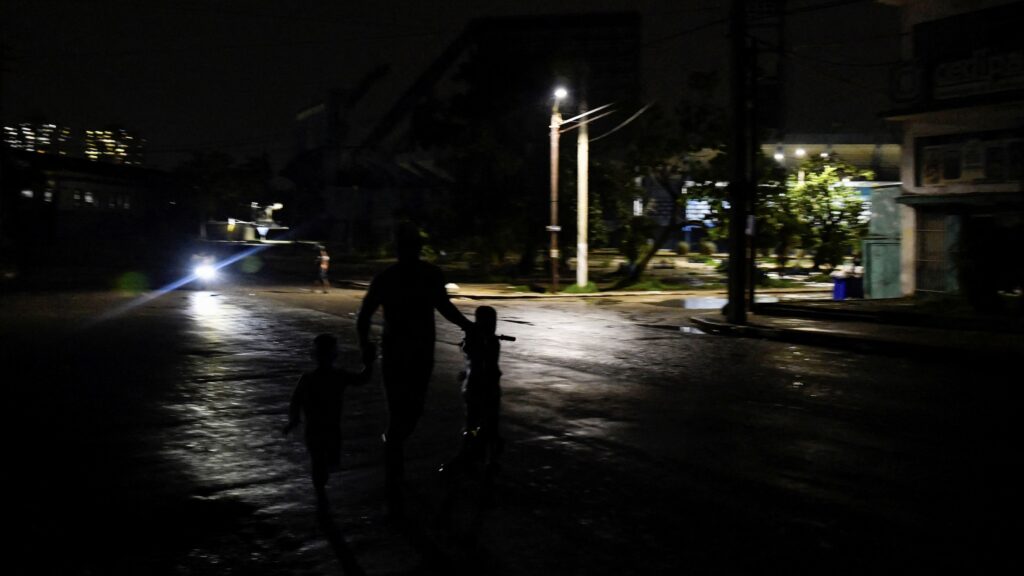
Thursday evening, and again on Saturday morning, Cuba's power grid collapsed.
Cuba is an island nation. It's in the Caribbean Sea. The blackout affected the whole of the island. It began with the failure of the Antonio Guiteras thermoelectric plant. It's a major generator east of the capital of Havana. When the Guiteras plant shut down, it started a chain reaction. It overtaxed the other power plants. A total collapse resulted. Officials were able to restore some power Friday. But the grid failed again early Saturday morning. As of Sunday, power had only been restored to 16% of the nation’s 10 million people.
“We are an island of zombies, staggering around with no idea where to go,” one Cuban resident told The New York Times. “Maybe I won’t be able to communicate much longer. We’re on the Titanic and it’s slowly sinking.”
Authorities blamed the blackout on a strained grid. But they also said their power system has long needed repairs and upgrades. That's a costly task. It's made even more difficult by US sanctions. They're part of a trade embargo the US put on Cuba. It started in the 1960s.
Cuba has eight power plants. They “have not received any operational maintenance, much less capital maintenance, in the last 12 to 15 years,” Jorge Piñon, an energy expert at the University of Texas at Austin, told the NYT.
Reflect: What are some ways that people can stay safe and support each other during a crisis, like a natural disaster or power outage?
Photo of a man walking with children near a street lamp in Cuba, from Reuters.
News brought to you by 
Read More News Stories Today!