

Take a Tumble on the Moon? Superlimbs to the Rescue!
October 22, 2024

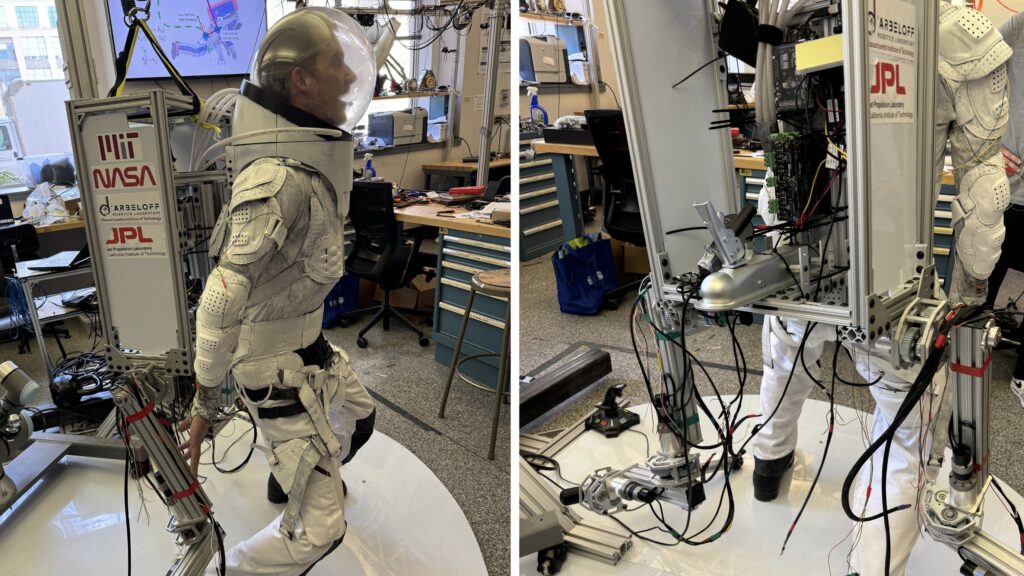
Thought Question: If you could invent a gadget to help people in space, what would it do?
Time and again, Apollo moon mission astronauts complained of a key aspect of the lunar surface. If you fall there, it’s really hard to get back up.
That’s where Massachusetts Institute of Technology (MIT) inventors hope superlimbs will come in handy.
Erik Ballesteros is an MIT PhD student. He works on superlimbs. “So, (a superlimb) allows you to go from point A to B a lot quicker and without using as much energy,” he told CNN. “And if (astronauts) start to lose their footing a little bit, it can help stabilize them.”
The moon is smaller than Earth. It doesn’t produce as much gravity. That can make movement of all kinds hard for creatures that evolved to move on Earth. To help, the MIT designers put two extra arms on an astronaut backpack. They are controlled by a robot. When a moonwalker begins to lose balance, the superlimbs extend down. They provide more support in the low-gravity setting.
If the moon’s lighter gravity wasn’t tricky enough, moon dust can be highly toxic. This presents a danger to astronauts wearing even heavy suits. After all, they’re the ones most likely to topple over. When they do, it can kick up a plume of the toxic dust. It all adds up to a problem in need of solving. Ballesteros thinks superlimbs are the answer.
“I want it to become almost like a natural (limb) of their bodies … so the astronaut almost feels awkward not having them,” he told CNN.
Photo of superlimbs from MIT media release courtesy of researchers.
News brought to you by 
Read More News Stories Today!