
Little Bag, Big Impact: Tossed Cheetos Change Cavern Ecosystem
September 18, 2024

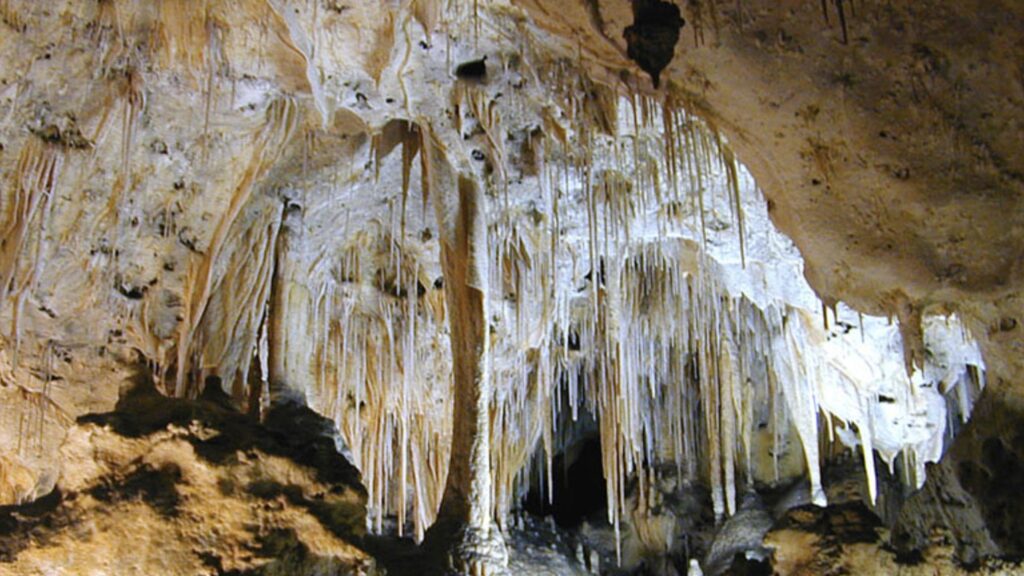
To make their way into New Mexico’s Carlsbad Caverns National Park, visitors must pass by signs asking them to respect the fragile underground ecosystem by leaving no trace. This includes not dropping litter and food waste. Most people are mindful. But there was one recent slip-up with a half-eaten bag of Cheetos. It serves as a reminder of the outsized impact humans can have on our planet.
“A spilled snack bag may seem (small), but to the life of the cave it can be world changing,” Carlsbad Park officials posted on Facebook. The bag of Cheetos had been on the cave floor for a few days at most. But it had already grown a “fleeting ecosystem” around it.
“The processed corn, softened by the humidity of the cave, formed the perfect environment to host microbial life and fungi,” officials wrote. “Cave crickets, mites, spiders and flies soon organize into a temporary food web, dispersing the nutrients to the surrounding cave and formations. Molds spread higher up the nearby surfaces, fruit, die and stink. And the cycle continues.”
Volunteers cleaned up the bag and mold growth. They scrubbed every inch of the affected stone with toothbrushes. They will keep watch to make sure there is no more contamination.
Conservationists lament the impact that litter has on the caverns. But they say it’s still important to allow visitors in.
“So it can be really, really bad,” cave microbiologist Diana Northup told The Associated Press. “But here’s the other side of the coin: The only way you can protect caves is for people to be able to see them and experience them.”
Reflect: Why do you think it’s important to protect natural places, and how can people help take care of them?
Photo of Carlsbad Caverns National Park from Wikimedia Commons courtesy of Eric Guinther.
News brought to you by 
Read More News Stories Today!