

Companies Seek Ways to Wrap Up Halloween Trash Problem
October 31, 2022

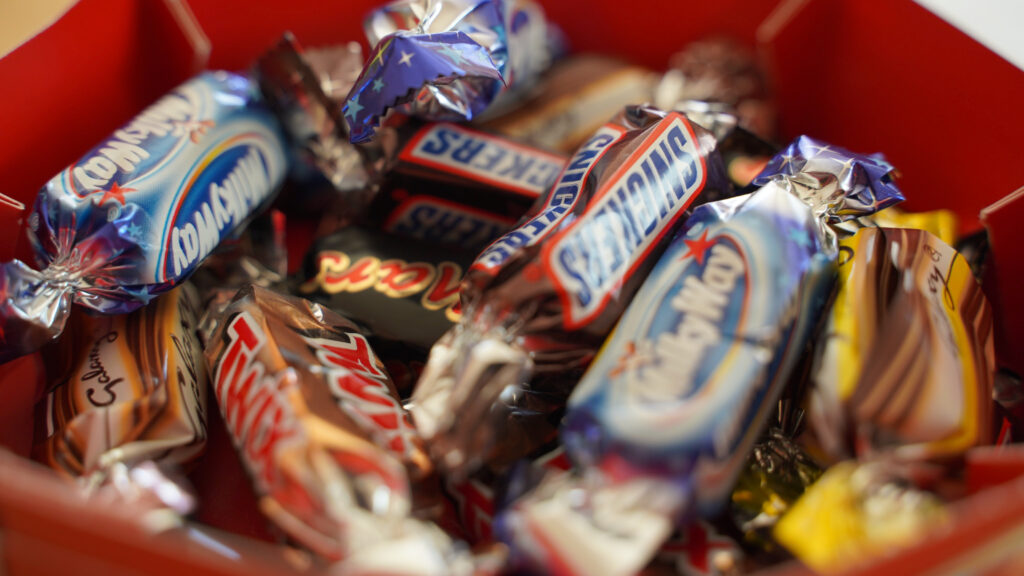
As trick-or-treaters fill up on candy, trash cans fill up with wrappers. The plastic that surrounds a Snickers bar or a Reese’s Cup is hard to recycle. Americans are predicted to dig into 600 million pounds of candy this Halloween season. So, some companies have started looking into ways to manage all the junk that's on junk food.
Mars is the candymaker behind Snickers, M&Ms, and Twix. It sent out 17,400 recycling bags to communities in October. The bags can be filled with wrappers. For free, they'll be shipped to G2 Revolution. The facility will break down wrappers. G2 will turn them into waste bags for dog owners. They expect to recycle about two tons of candy wrappers this season.
Mars has also partnered with Rubicon Technologies. It matches major companies with local recycling centers. Rubicon runs a program called Trick or Trash. It sends free boxes to schools so students can bring in their empty candy wrappers and load the boxes. Schools then ship the trash to a recycling center.
Packaging of candies, food, and other goods makes up 21% of the trash that piles up in US landfills. That's according to the US Environmental Protection Agency. Corporate efforts to fight that waste are key, says Leah Karrer. She's a DC-based conservationist.
“(Recycling) is not a cost-effective solution for most families, when the items can simply be thrown into a trash container to be picked up for free,” Karrer told The Associated Press. It “cannot be on the customer to fix the plastic waste problem. The solution is system change.”
Photo by Sebbi Strauch courtesy of Unsplash.
News brought to you by 
Read More News Stories Today!