
A La Niña Winter: How Will New Weather Pattern Affect the US?
October 28, 2024

Autumn leaves are falling, and outside weather is turning into a crisp fall across the US. So it’s not too soon to ask: What do the colder months ahead have in store for us?
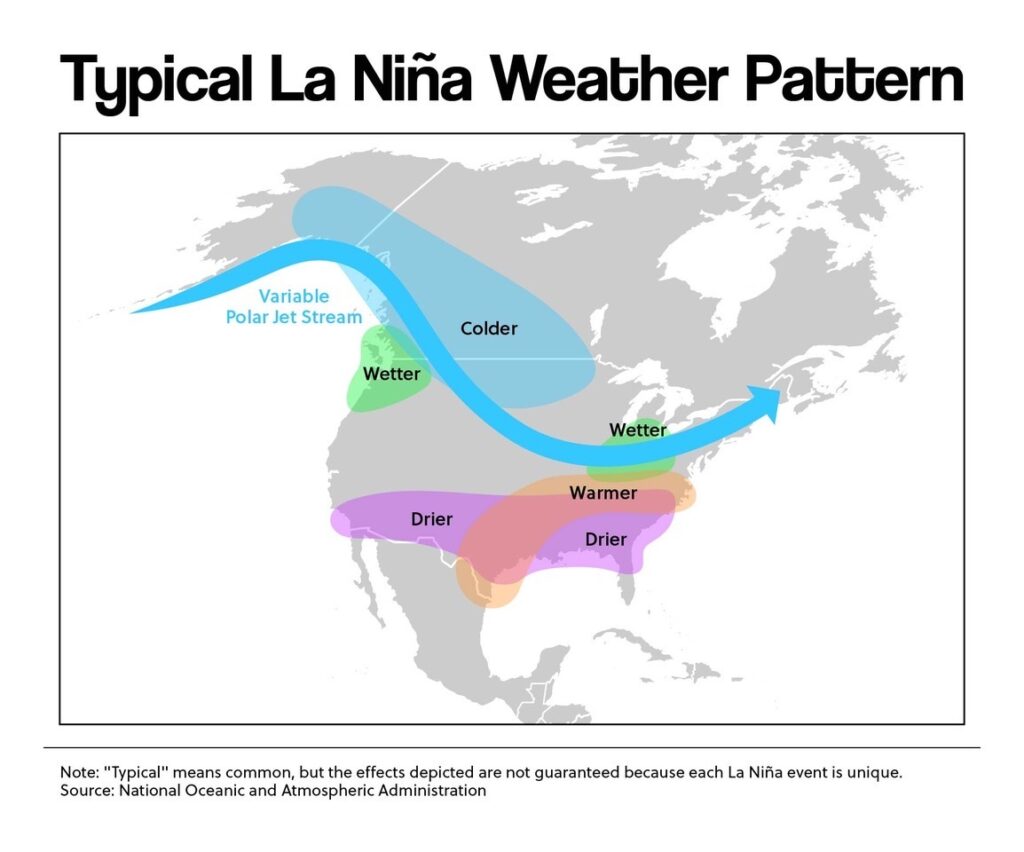
Meteorologists are starting to see the US winter in their forecast models. They're partly using the weather pattern that's moving over the continental US right now. It's called La Niña. Two weather cycles normally rotate each three to five years. They're the current La Niña and El Niño.
Last year’s El Niño, along with a heating planet due to climate change, brought the warmest winter on record to the Lower 48 states. El Niño commonly sends warmer air from tropical climates in the Pacific Ocean across the US. La Niña, by contrast, is a cooler climate pattern. It's marked by milder ocean surface temperatures in the central and east-central Pacific.
La Niña normally offers a cool-down for the Lower 48 US states. But that was before climate change so swiftly swept over our world. Still, it’s projected that the US won’t see the super warm winter of last year.
For now, forecasters say the northern US may see a wetter than normal winter. It could lessen a current cycle of drought in the Midwest. The US South, meanwhile, may see see drier, warmer weather.
Climate change makes exact weather cycles harder to predict, though. So while wetter weather is forecast for the northern US, how much of that will be snow, compared to rain, is unknown.
It is likely that winter will see frequent changes in weather. “In a warming world, we continue to see weather extremes manifest in the coldest months,” Michael Morgan told CNN. He works for the National Oceanic and Atmospheric Administration.
Reflect: How do you feel when the seasons change? What do you like and dislike about the winter?
News brought to you by 
Read More News Stories Today!