
What is Scientific Observation?
Provided by: Gulf of Maine Research Institute|Published on: December 12, 2025|Last updated: July 16, 2026
Grades: 6, 7, 8
Type: Lesson Plans
Subjects: Biology
Authors: Gulf of Maine Research Institute
Location: North America > United States > Maine
This resource has been reviewed by SubjectToClimate's climate scientists and verified for scientific accuracy and up-to-date information. Learn about our review process →
This resource has been reviewed by SubjectToClimate's climate scientists and verified for scientific accuracy and up-to-date information. Learn about our review process →
Synopsis
- In this three-lesson unit from the Gulf of Maine Research Institute, students will learn how to oberve phenomena with a scientific purpose, what might be important to write down, and how these recorded observations can be used to come up with important questions and hypotheses.
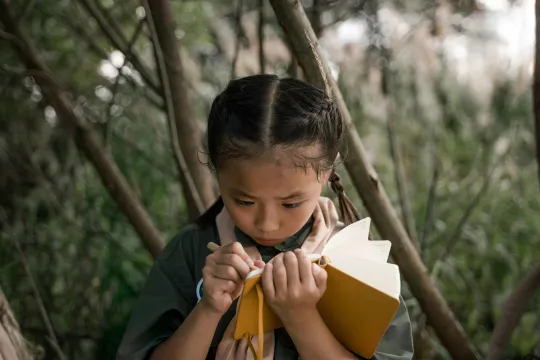
- Students will make observations about natural objects, see examples of people making recorded observations of the world around them, interpret them, and deconstruct scientific observations by identifying key phrases.
Teaching Materials
Positives
- This unit introduces scientific observation in a way that can empower students to notice and wonder about things in their own environment.
- These activities require few materials, making them accessible for teachers with limited resources.
Prerequisites
- In the Lesson 2 slides, there is a slide with a bird feeder live cam. The lesson plan and the slides do not give any context for how to use this slide in the lesson. Teachers may want to remove this slide, or they can use it in place of an outdoor observation.
Differentiation & Implementation
- In Lesson 1, teachers may want to provide students with an example of observation notes that are specific and detailed. Teachers can model this activity with items that students will not be using in their observations.
- Students may wish to take notes during the direct instruction portions of this unit, especially to note the key terms that indicate whether something is background information, an observation, or an idea or question in Lesson 3.
- Teachers can follow this unit with an extension activity where students create in-depth nature notes from their observation. These other GMRI resources can be helpful for implementing such an activity.
- Teachers can address SDG 14, Life Below Water, or SDG 15, Life on Land, by explaining that asking the questions about what you observe can eventually lead to solutions to protect plants and animals who may be facing climate impacts.
In this lesson, students will learn what observations are, how to make and interpret them, and how they are a core part of a scientist's job. The lesson is hands-on, so students will get to practice making their own observations and interpreting them multiple times. Understanding scientific observations is fundamental to students' understanding of science. The information presented is accurate, and this resource is recommended for teaching.
Teaching Tips
Standards
Resource Type and Format
Scientist Reviewed
This resource has been reviewed by SubjectToClimate's climate scientists and verified for scientific accuracy and up-to-date information. Our review process ensures that every resource in our library reflects the current state of climate science.
Learn about our review process →