
Nature's Role in Creating Resilience
Provided by: The Nature Conservancy|Published on: September 29, 2025|Last updated: July 16, 2026
Grades: 3, 4, 5, 6, 7, 8
Type: Videos
Subjects: Biology, Earth and Space Sciences
Authors: The Nature Conservancy
Location: North America > United States > Florida

This resource has been reviewed by SubjectToClimate's climate scientists and verified for scientific accuracy and up-to-date information. Learn about our review process →
This resource has been reviewed by SubjectToClimate's climate scientists and verified for scientific accuracy and up-to-date information. Learn about our review process →
Synopsis
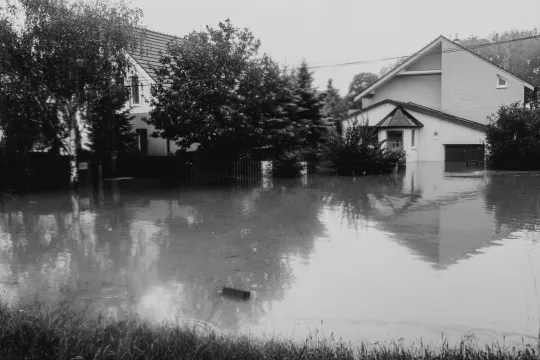
- This video from The Nature Conservancy describes the severe floods in Pensacola, Florida, in 2012 and 2014 and introduces oyster reefs and other nature-based solutions as answers to the rising risk of more severe precipitation.
- Students will understand how climate change influences the weather and how Florida's geography makes it more susceptible to dangerous flooding.
Teaching Materials
Positives
- This video does a good job of briefly explaining what climate change is and the difference between climate and weather.
- The focus on solutions in this video makes the viewer hopeful and the concluding call to action empowers people to get involved.
Prerequisites
- Students should know how floods occur and be familiar with concepts like elevation and erosion.
- The Nature Lab lesson plan connected to this resource can be found here.
Differentiation & Implementation
- After watching, teachers can implement this lesson to have students further explore oyster reefs as an adaptation solution.
- Teachers can expand the conversation about climate change and its impacts by discussing the causes behind climate change, as these are not covered in the video. Teachers may want to explain the greenhouse effect and how greenhouse gases are released.
- This video can be connected to Sustainable Development Goal 13, Climate Action, and Goal 15, Life on Land.
This resource is strongly grounded in climate resilience and environmental sustainability, using a case study of a historic flood in Pensacola, Florida, to frame the discussion. The difference between climate and weather is clearly presented, and the focus is on using natural solutions, like oyster reefs and salt marshes, to protect vulnerable communities. This resource is recommended for teaching.
Teaching Tips
Standards
Resource Type and Format
Scientist Reviewed
This resource has been reviewed by SubjectToClimate's climate scientists and verified for scientific accuracy and up-to-date information. Our review process ensures that every resource in our library reflects the current state of climate science.
Learn about our review process →