
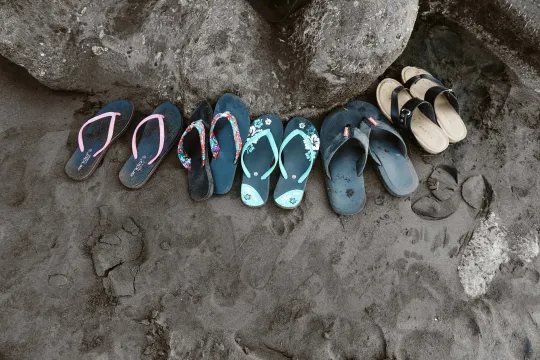
Footprints on the Katmai
Provided by: KEEN|Published on: May 16, 2025|Last updated: July 16, 2026
Grades: 6, 7, 8, 9, 10, 11, 12
Type: Videos
Subjects: Earth and Space Sciences, Geography, Visual and Performing Arts
Authors: KEEN
Location: North America > United States > Alaska
This resource has been reviewed by SubjectToClimate's climate scientists and verified for scientific accuracy and up-to-date information. Learn about our review process →
This resource has been reviewed by SubjectToClimate's climate scientists and verified for scientific accuracy and up-to-date information. Learn about our review process →
Synopsis
- In this documentary from KEEN, students will see the journey of an artist and a team of ocean conservationists to Katmai, as they clean up plastics that have washed up on this uninhabited shore.
- Students will learn how plastics end up in Katmai and on shores around the world, and what consequences they have on the environment.
Teaching Materials
Positives
- This video has a high production quality, with beautiful shots and music to contribute to the tone of the film.
- The video has a positive and hopeful message about the impact one person can have.
Prerequisites
- Students should understand that plastic is not biodegradable and is permanent, unless it is plant-based.
- It may also help students to have a basic understanding of ocean currents and how they carry objects from one place to another.
Differentiation & Implementation
- This video can be used while talking about ocean currents to help explain how plastics ended up on Katmai.
- This video highlights the plastics that don't get recycled. Teachers can take the time to discuss the importance of reducing and refusing plastic as the first and most important step in solving the plastic crisis.
- Art teachers can use this as an example of art inspired by the environment and global issues. Teachers can encourage students to create their own piece of art that communicates the severity of the plastic problem.
This 22-minute video illustrates how pollution from single-use plastics affects the ocean, waterways, and the ocean's resources. It tries to show how consumer behavior and environmental deterioration are causally related by illustrating how plastics found in water bodies can be linked to the places where they were used. This resource would encourage students to investigate and consider ways to mitigate ocean plastic pollution, even if there is no specific science to review. Teaching with this resource is advised.
Teaching Tips
Standards
Resource Type and Format
Scientist Reviewed
This resource has been reviewed by SubjectToClimate's climate scientists and verified for scientific accuracy and up-to-date information. Our review process ensures that every resource in our library reflects the current state of climate science.
Learn about our review process →