
Farming and Climate Change
Provided by: MIT Environmental Solutions Initiative|Published on: December 12, 2022|Last updated: July 16, 2026
Grades: 11, 12, AP
Type: Lesson Plans
Subjects: Social Studies, Biology, Earth and Space Sciences
Authors: MIT Environmental Solutions Initiative
Location: Earth
This resource has been reviewed by SubjectToClimate's climate scientists and verified for scientific accuracy and up-to-date information. Learn about our review process →
This resource has been reviewed by SubjectToClimate's climate scientists and verified for scientific accuracy and up-to-date information. Learn about our review process →
Synopsis
- In this lesson, students learn about the effects of agriculture and climate change by listening to a podcast, assessing the geographic change in plant hardiness zones in the United States, and learning about agroecology as a solution.
- The resource includes a teacher's guide, student worksheets, case studies, and suggestions for implementation and curriculum connections.
Teaching Materials
Positives
- The map comparison activity may help visual learners and all students visualize the rapid change in climate already occurring in the United States.
- Each section can be used as a stand-alone, in sequence, or integrated into other curriculum needs.
Additional Prerequisites
- Before starting the lesson, students should already know that agriculture includes any activities related to providing food for humans (e.g., growing crops, raising animals, etc.). Students should also understand that agriculture is impacted by extreme heat, growing seasons, rainfall, flooding, pests, drought, and disease (all of which are affected by climate change).
- Although the information about hardiness zones can be applied elsewhere, the maps in the first activity are only of the United States.
- The second activity requires online research and, therefore, access to the Internet.
Differentiation
- Students can listen to the podcast at home to save class time and prepare for the lesson and activities.
- Following the case study activity, have students discuss what they learned with the class. Students can then identify patterns about which areas are most affected and why.
- This resource can also be used in social studies classes during lessons about the social impacts of food insecurity and famine.
- To learn more about how food is connected to climate change, use this lesson about food waste, plant-based diets, and crop varieties.
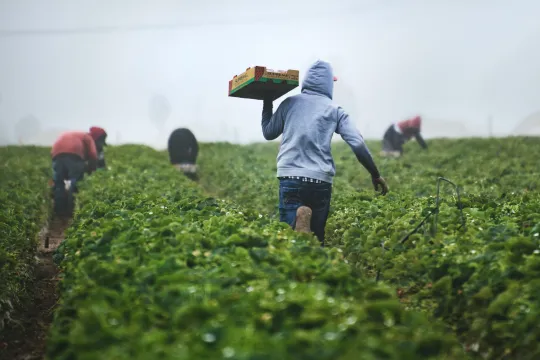
This resource is a lesson plan that talks about the relationship between climate change, farming, food, and famines. How farmers are affected and how farming adds to and reduces carbon in the atmosphere are discussed. The lesson plan includes a 14-minute podcast episode, a teacher guide (lesson plan), and worksheets for students. The podcast does briefly discuss an overview of what climate change is, it then relates this to the specific topic of the episode. In the podcast, the host interviews a scientist from NASA who studies these topics in her research. They do discuss how this is a difficult problem and not everyone can contribute in the same way. However, they present this in an encouraging and optimistic way. Links in the lesson plan have been checked for accuracy as well. This resource is recommended for teaching.
Teaching Tips
Standards
Resource Type and Format
Scientist Reviewed
This resource has been reviewed by SubjectToClimate's climate scientists and verified for scientific accuracy and up-to-date information. Our review process ensures that every resource in our library reflects the current state of climate science.
Learn about our review process →