
Cutting our Greenhouse Gas Emissions to Zero
Provided by: PBS|Published on: November 15, 2022|Last updated: July 16, 2026
Grades: 9, 10, 11, 12
Type: Videos
Subjects: Earth and Space Sciences, Economics, Engineering
Authors: NOVA
Location: Earth
This resource has been reviewed by SubjectToClimate's climate scientists and verified for scientific accuracy and up-to-date information. Learn about our review process →
This resource has been reviewed by SubjectToClimate's climate scientists and verified for scientific accuracy and up-to-date information. Learn about our review process →
Synopsis
- This video presents the essential strategy of addressing climate change through mitigation efforts like increasing energy efficiency, reducing energy waste, and increasing clean energy production.
- The video provides a visual representation of annual coal emissions to help students grasp the scale of the problem and discusses the need for energy storage and distribution solutions.
Teaching Materials
Positives
- This video simplifies complex topics like climate mitigation and the clean energy transition.
- The video uses a mix of data visualization, graphics, and expert interviews.
Additional Prerequisites
- Although not mentioned in the video, it is essential to clarify the difference between reaching zero emissions versus net-zero emissions.
- This resource requires access to the Internet.
Differentiation
- For students who may prefer to read along, the resource includes a transcript of the video.
- The video briefly mentions the importance of carbon sequestration, which the teacher can expand upon.
- Have students consider the social, economic, and political reasons why the clean energy transition is not happening faster and brainstorm how these challenges can be overcome.
- Use this other resource to provide a more in-depth look at clean energy technologies.
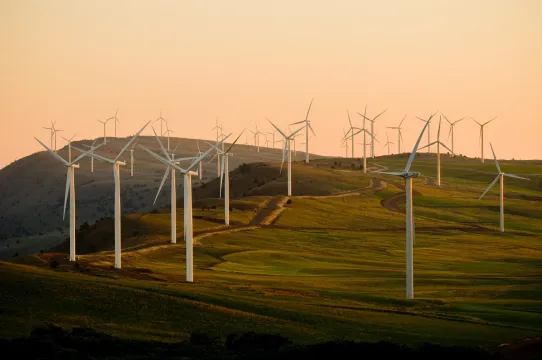
The resource talks about the benefits of renewable energy sources. It is a mitigation strategy to addressing climate change impacts. Although, there are a few drawbacks when it comes to scaling up, when compared with nonrenewable sources, this form of energy is becoming cheaper than fossil fuels. It is not only cost-effective but the best energy solution the world needs now. This resource is recommended for teaching.
Teaching Tips
Standards
Resource Type and Format
Scientist Reviewed
This resource has been reviewed by SubjectToClimate's climate scientists and verified for scientific accuracy and up-to-date information. Our review process ensures that every resource in our library reflects the current state of climate science.
Learn about our review process →