
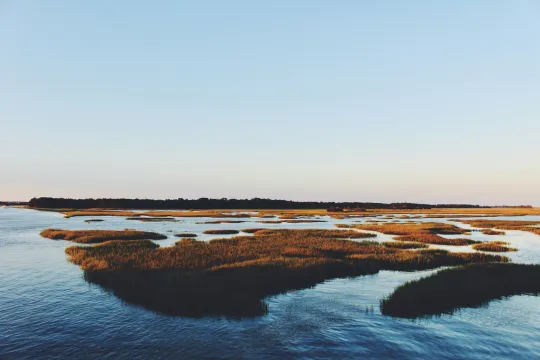
Protect Coastal Wetlands
Grades: 9, 10, 11, 12, AP
Type: Articles/Websites
Subjects: Biology, Earth and Space Sciences
Authors: Project Drawdown
Location: Earth
This resource has been reviewed by SubjectToClimate's climate scientists and verified for scientific accuracy and up-to-date information. Learn about our review process →
This resource has been reviewed by SubjectToClimate's climate scientists and verified for scientific accuracy and up-to-date information. Learn about our review process →
Synopsis
- In this new climate solution report, students will learn about the ecological importance of protecting coastal wetlands and their role in carbon sequestration and protecting coastlines from storm damage and flooding.
- Through interactives, infographics, maps, and text, students will see the carbon sequestration potential for mangroves, seagrasses, and salt marshes, the costs or windfalls of each, and the benefits for human well-being.
Teaching Materials
Positives
- The report includes actions students can take to be a part of this solution.
- This solution from Project Drawdown has a number of features, including the maps that can be compared to see where each wetland exists currently.
Prerequisites
- Students should understand the basics of the carbon cycle.
- Some students may need terms defined, such as hectare, sequestration, marsh, anthropogenic, and others.
Differentiation & Implementation
- After reading this report, students can research the ecosystem services wetlands provide, apart from carbon sequestration.
- AP Environmental Science classes and AP Biology classes can use this resource to support AP course topics such as the carbon cycle, ecosystems, and global change.
- Civics students can research and discuss the necessary steps for wetlands to be protected by law.
- Each student can find and research an organization that is working to protect wetlands and inform others about how they can support them.
This resource presents coastal wetland protection as a means to prevent and sequester carbon emissions. The text is lucid, has clear organization, is well-sourced, and includes several peer-reviewed citations. A thoughtful discussion highlights the importance of coastal wetland protection within larger climate change mitigation plans. This resource is recommended for teaching.
Teaching Tips
Standards
Resource Type and Format
Scientist Reviewed
This resource has been reviewed by SubjectToClimate's climate scientists and verified for scientific accuracy and up-to-date information. Our review process ensures that every resource in our library reflects the current state of climate science.
Learn about our review process →