
Build a Tree
Grades: K, 1, 2
Type: Activity - Classroom
Subjects: Science, Visual and Performing Arts
Authors: Green Schoolyards America
Location: Earth
This resource has been reviewed by SubjectToClimate's climate scientists and verified for scientific accuracy and up-to-date information. Learn about our review process →
This resource has been reviewed by SubjectToClimate's climate scientists and verified for scientific accuracy and up-to-date information. Learn about our review process →
Synopsis
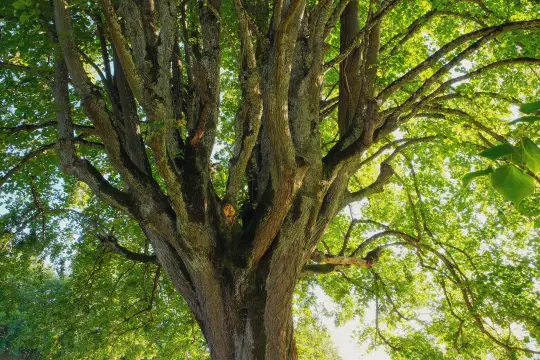
- In this collaborative role-play activity, students act out the different parts of a tree, so the whole class becomes a living model of a tree.
- As students take each position with its own movement and sound, such as roots slurping up water and leaves soaking up sunshine, they learn what each part does and how the parts work together to help a tree survive.
Teaching Materials
Classroom Implementation:
- This activity works best outdoors or in a classroom-sized space where students can move and be loud.
- The role-play activity requires no materials and engages students' body movements, making it a good launch or break to a calmer lesson.
Interdisciplinary Connections:
- Science:
- After modeling the tree with their bodies, have students draw and label the parts of a tree.
- Find a tree outside and have students point and touch the different parts of it.
- Performing Arts:
- Treat the activity as a guided drama experience in which students use body, gesture, and voice to represent a character or role.
- Have students audition to be different parts of the tree by silently acting with just body movements.
In this activity, students learn about the parts of a tree, what each part does, and how the parts are connected to one another. The activity has students move around and describe the different parts of a tree through fun chants and actions, helping them understand the concepts. The information presented is accurate, and this resource is recommended for teaching.
Teaching Tips
Standards
Resource Type and Format
Scientist Reviewed
This resource has been reviewed by SubjectToClimate's climate scientists and verified for scientific accuracy and up-to-date information. Our review process ensures that every resource in our library reflects the current state of climate science.
Learn about our review process →