
Humans Only Species to Make Medicine? Not So, Orangutan Shows
May 6, 2024

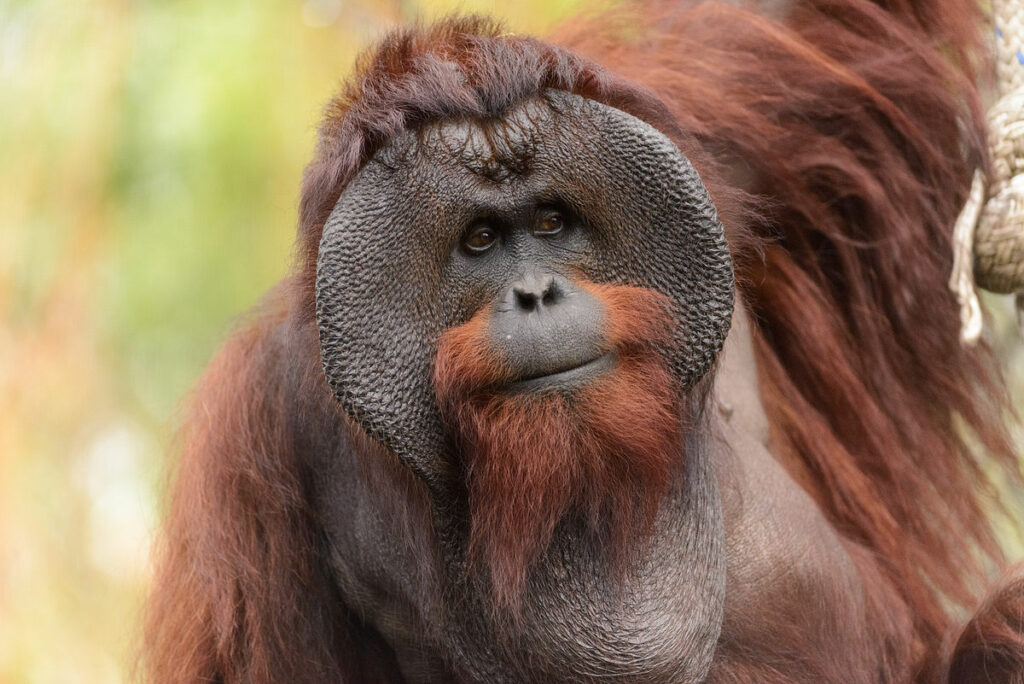
For 35 years, researchers have studied the life of Rakus. He's a male orangutan living in Gunung Leuser National Park on the island of Sumatra. Most of that time, Rakus behaved like others of his species. In June 2022, though, Rakus did something that might just change the way we think about great apes.
He made his own medicine.
“Once I heard about it, I got extremely excited,” expert Isabelle Laumer told The New York Times.
After getting a cut on his face, Rakus rested in a leafy patch of vines. As Laumer's team watched, Rakus gathered leaves. He chewed them up. Then he took the juices and rubbed them on his open wound. He also pressed the chewed-up wad of leaves to the injury, making a poultice.
Less than a month later, the wound “healed without any signs of infection,” Laumer said. Her team published their findings in the journal Scientific Reports.
The vine was akar kuning. That's a plant known to have antibacterial and anti-inflammatory effects. Humans have used it for centuries to treat a number of diseases. This marked the first time humans saw an animal using a plant to treat an open wound, though. Experts suggest the finding could tell us more about how humans first came up with medicine.
The study seems to show that treating wounds with plants "may be as old as the last common ancestor of orangutans and humans," study co-author Caroline Schuppli told Reuters.
Reflect: What is the coolest animal fact you know?
Photo of male orangutan courtesy Eric Kilby on Wikimedia Commons.
News brought to you by 
Read More News Stories Today!